

Optimizing Commercial HVAC & Plumbing for Desert Extremes: A Las Cruces Facility Manager’s Guide
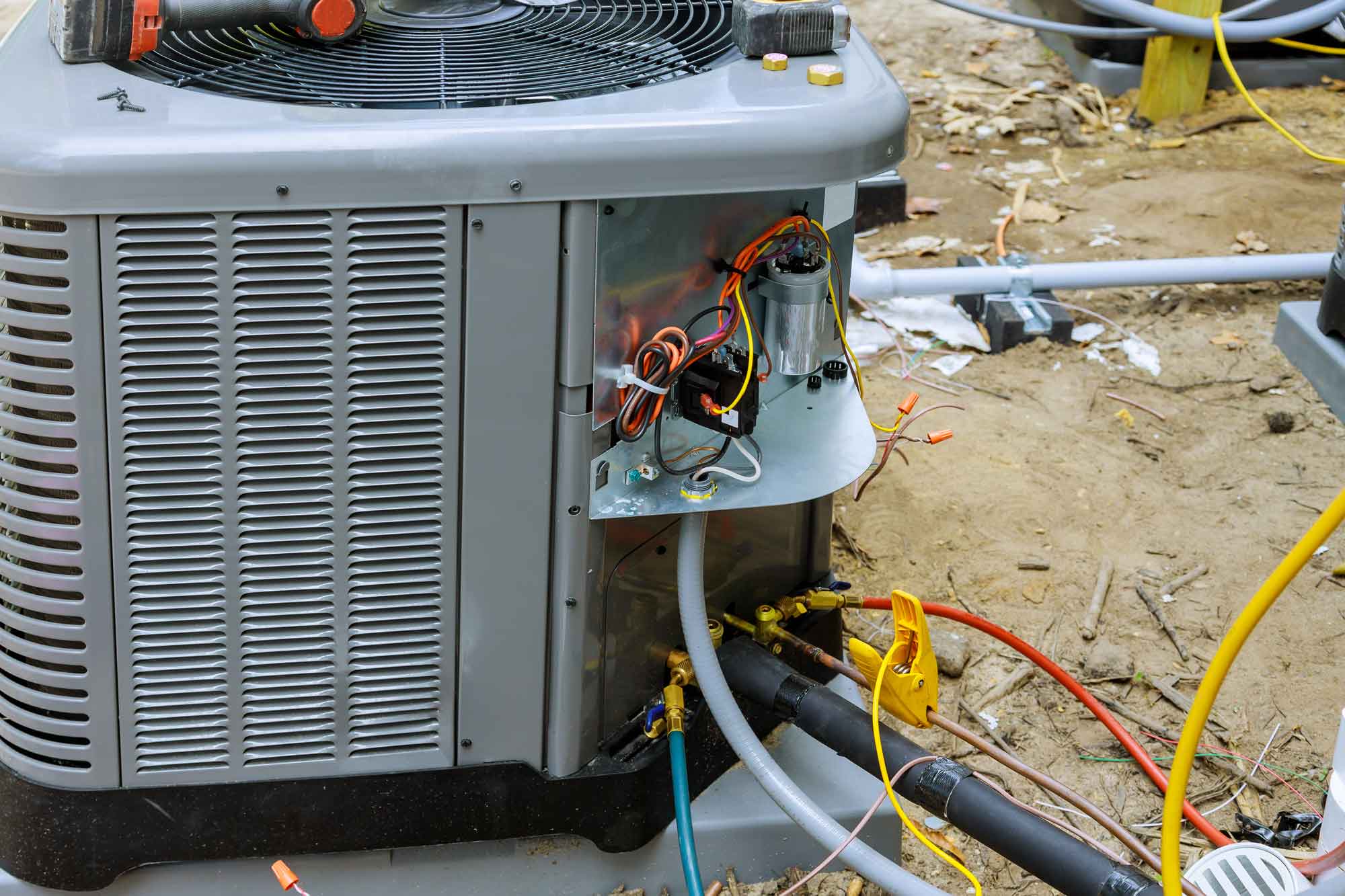
Commercial buildings in Las Cruces operate under conditions that can expose weaknesses in HVAC and plumbing systems quickly. Triple-digit summer heat, airborne desert dust, seasonal thunderstorms, heavy cooling demand, and mineral-bearing groundwater can all affect equipment performance and maintenance schedules.
For facility managers, optimization is less about reacting to the next breakdown and more about identifying the components most vulnerable to local conditions before they interrupt operations.
Quick answer: Commercial HVAC and plumbing systems in Las Cruces perform best when maintenance accounts for extreme cooling loads, dust accumulation, changing seasonal conditions, water-system demands, and the specific operating needs of the facility. Facility managers should prioritize airflow, heat rejection, controls, drainage, plumbing fixtures, water-heating equipment, backflow protection, and early detection of leaks or abnormal equipment performance.
What local facility managers should know
-
Commercial cooling equipment needs particular attention during the long periods of high temperatures common across the Mesilla Valley.
-
Dust and debris can interfere with filters, coils, outdoor equipment, and airflow, making inspection frequency especially important in southern New Mexico.
-
Plumbing maintenance should include more than visible leaks because valves, fixtures, drains, water heaters, and other components can deteriorate gradually.
-
Monsoon-season thunderstorms can introduce wind, dust, moisture, and drainage concerns that differ from the problems encountered during the hottest, driest part of summer.
-
Maintenance planning should reflect a building’s occupancy, operating hours, equipment condition, and consequences of downtime rather than relying solely on a generic calendar.
Why Do Desert Extremes Matter for Commercial HVAC and Plumbing?
Desert extremes matter because commercial mechanical systems must handle prolonged heat, dust, large temperature swings, and demanding operating schedules while continuing to serve employees, customers, tenants, equipment, and daily business functions. In Las Cruces, those pressures make preventive maintenance and system monitoring particularly valuable.
Recent National Weather Service observations illustrate the cooling challenge. In July 2026, the Las Cruces climate station recorded an average daily maximum temperature of 97.4°F, with 28 days reaching at least 90°F and a monthly high of 106°F.
A retail property near Telshor Boulevard, an office near Downtown, an industrial facility around West Mesa, and a commercial building near New Mexico State University may have very different loads. What they share is exposure to the Mesilla Valley’s demanding desert environment.
At B & H Mechanical Inc., we help commercial property and facility managers evaluate HVAC and plumbing needs with those local operating conditions in mind. Our focus is on identifying problems, maintaining reliable operation, and helping customers make informed decisions about their mechanical systems.
What Does Local Data Tell Facility Managers?
Local data shows that commercial cooling equipment must be prepared for sustained high-temperature operation, while municipal water and wastewater infrastructure makes plumbing maintenance an equally important part of facility planning. These are not abstract regional concerns. They directly affect buildings throughout the area.
National Weather Service preliminary data for August 2026 showed 23 days at or above 90°F through August 26, with a high of 103°F. That sustained heat can keep rooftop units, condensers, pumps, controls, and related components working for long periods.
On the plumbing side, Las Cruces Utilities reports that the municipal system draws water from the Mesilla and Jornada Bolsons. The utility maintains more than 600 miles of underground water lines in its primary system and approximately 533 miles of sewer lines.
These public figures do not determine how an individual building will perform, but they provide useful context for facility managers planning maintenance in the region.
How Can Desert Conditions Affect Commercial Buildings?
Desert conditions can increase cooling demand, restrict airflow through dust buildup, accelerate wear on heavily used components, and turn relatively small plumbing or HVAC deficiencies into operational problems. For area businesses, the consequences may include uncomfortable spaces, equipment downtime, water damage, wasted energy, or emergency service needs.
A poorly performing cooling zone can affect employees and customers during peak summer temperatures. A leaking fixture or supply connection can create property damage without immediately drawing attention. A clogged drain in a restaurant, medical office, school, or other high-use facility can interfere with normal operations.
Facility managers therefore benefit from looking at HVAC and plumbing as operational infrastructure rather than separate systems that receive attention only when something fails.
What Warning Signs Should Facility Managers Watch For?
Facility managers should investigate changes in temperature, airflow, equipment cycling, water pressure, drainage, sound, odor, and utility use because changes from normal operation can provide an early warning of mechanical problems. Establishing a baseline for the building makes unusual behavior easier to recognize.
Watch for:
-
Rooms or zones that no longer maintain their normal temperature
-
HVAC equipment that runs unusually long or cycles frequently
-
Weak airflow, unexpected noise, or new vibration
-
Visible dirt buildup around returns, registers, coils, or outdoor equipment
-
Unexplained water around fixtures, mechanical rooms, ceilings, or equipment
-
Slow drains, recurring backups, or sewer odors
-
Changes in water pressure or hot-water availability
-
Sudden utility-use changes that cannot be explained by occupancy, weather, or operating hours
Documenting when and where these symptoms occur can also give a commercial technician useful diagnostic information.
When Should a Facility Manager Call a Professional?
A facility manager should call a professional when a problem involves refrigerant systems, electrical components, combustion equipment, concealed plumbing, persistent drainage failures, backflow equipment, significant leaks, or recurring performance problems. Routine visual checks are useful, but commercial mechanical work can require specialized testing, tools, and code knowledge.
Staff can safely monitor thermostats, note abnormal sounds, check accessible areas for visible leaks, review maintenance records, and confirm that vents have not been obstructed.
Professional evaluation becomes more important when a symptom repeats, affects multiple areas, creates a potential safety or property risk, or threatens business continuity during extreme weather.
Local requirements matter too. Las Cruces Utilities says approved backflow prevention assemblies are required under City Ordinance 1694 where applicable, and its program oversees assemblies serving more than 2,000 businesses. Installations must follow relevant plumbing and building codes.
What Common Local Conditions Put Systems Under Stress?
The most common local stresses include sustained summer cooling demand, airborne dust, seasonal storm activity, water-related deposits, heavy commercial usage, and deferred maintenance. The exact combination varies by property, but each can influence how frequently equipment needs inspection.
1. Prolonged heat: Rooftop and outdoor HVAC equipment may operate for extended periods during southern New Mexico summers.
2. Desert dust: Windborne particles can accumulate on filters and heat-transfer surfaces, making unrestricted airflow an important maintenance priority.
3. Monsoon conditions: Thunderstorms can bring abrupt changes in wind, dust, rain, and drainage demands after long dry periods.
4. Water-system deposits: The City has noted that iron, manganese, and calcium deposits can become visible following some water-system outages. Facility-specific water conditions and equipment should be evaluated before deciding whether treatment or maintenance changes are appropriate.
5. Commercial operating loads: Restaurants, offices, healthcare spaces, retail properties, warehouses, and educational buildings near NMSU can place very different demands on HVAC and plumbing infrastructure.
How Should Commercial Systems Be Maintained for Desert Conditions?
Commercial systems should be maintained according to equipment requirements, actual operating conditions, and seasonal desert stresses rather than a one-size-fits-all schedule. In Las Cruces, the period before peak summer demand is especially useful for finding cooling problems before equipment is operating under its heaviest load.
Facility teams can routinely inspect accessible filters, registers, thermostats, visible piping, drains, plumbing fixtures, and mechanical-room conditions. Maintenance records should note recurring repairs, unusual readings, tenant complaints, and equipment that repeatedly falls outside normal operation.
Before summer, emphasize cooling capacity, airflow, coils, controls, electrical components, condensate drainage, and outdoor equipment condition. Before and during monsoon season, check drainage pathways and inspect exposed equipment after significant wind or dust events.
DIY inspection should stop when diagnosis requires opening energized equipment, working with refrigerant, altering gas or water piping, clearing serious obstructions, or performing code-regulated work.
What Results Can Facility Managers Expect From Proactive Maintenance?
Proactive maintenance can help facility managers identify developing problems earlier, maintain more consistent building performance, and make repair or replacement decisions with more information. It cannot eliminate every equipment failure, but it can reduce reliance on purely reactive maintenance.
For commercial properties from University Avenue to the East Mesa, the practical goal is predictable operation. A documented maintenance history can also reveal patterns such as repeated component failures, declining performance, chronic drain issues, or equipment approaching the point where replacement deserves consideration.
What Commercial Maintenance Mistakes Should Be Avoided?
The biggest maintenance mistakes are waiting for failure, treating symptoms without diagnosing causes, and using generic schedules that ignore actual building conditions. Desert operation can magnify the consequences of all three.
Mistake: Waiting until a rooftop unit stops cooling.
Consequence: Diagnosis happens during peak demand when the affected space is already uncomfortable.
Better approach: Inspect and service equipment before the hottest period.
Mistake: Repeatedly clearing a slow drain without investigating why it returns.
Consequence: An underlying plumbing problem may continue developing.
Better approach: Have recurring drainage problems professionally evaluated.
Mistake: Assuming every building needs identical maintenance intervals.
Consequence: A high-use restaurant or medical property may be treated like a lightly occupied office.
Better approach: Base maintenance on equipment, environment, occupancy, operating hours, and service history.
What Is a Common Local Facility Scenario?
A common local scenario is a commercial building that appears ready for summer until sustained high temperatures reveal reduced airflow, dirty heat-transfer surfaces, control problems, or worn components. This is a representative scenario, not a specific B & H Mechanical Inc. customer case study.
The facility may still cool during mild spring weather, so the problem remains unnoticed. Once outdoor temperatures climb and equipment operates for longer periods, indoor temperatures become harder to maintain.
The better opportunity is to identify those limitations before peak conditions arrive, when the facility manager has more flexibility to evaluate repair, maintenance, or replacement options.
Which Commercial Services Help Address These Problems?
Commercial HVAC service, preventive maintenance, plumbing diagnostics, repairs, and system evaluation can address many of the mechanical problems created or exposed by desert operating conditions. The appropriate solution depends on the equipment, failure mode, building demands, and remaining useful condition of the system.
We can help facility managers determine whether a problem calls for routine maintenance, targeted repair, further diagnosis, or discussion of replacement options.
How Should Facility Managers Compare Repair, Maintenance, and Replacement?
Facility managers should compare repair, maintenance, and replacement based on reliability, equipment condition, recurring costs, building needs, and the operational consequences of another failure. The cheapest immediate option is not automatically the most practical long-term choice.
Maintenance makes sense for keeping serviceable equipment operating properly. Repair is appropriate when a defined fault can reasonably restore performance. Replacement deserves consideration when equipment has recurring failures, significant deterioration, inadequate capacity, or performance problems that repairs are no longer resolving effectively.
For critical facilities, downtime risk should be part of that calculation alongside the direct project cost.
What Areas Can Commercial Facility Managers Consider When Planning Service?
Facility managers should plan mechanical service around their specific property and its operating environment, whether the building is in Las Cruces or another nearby part of Doña Ana County. Properties in Mesilla, University Park, and surrounding communities may face similar regional heat and dust while still having different equipment and infrastructure needs.
Confirm service availability for your specific property when scheduling.
What Can It Cost to Ignore a Developing Mechanical Problem?
Ignoring a developing HVAC or plumbing problem can allow a manageable maintenance issue to become a larger repair, disruption, or property-damage concern. In Las Cruces, cooling problems are particularly inconvenient when they become failures during periods of extreme summer heat.
Waiting can also remove options. A facility manager who discovers deterioration during planned maintenance may have time to budget and schedule work. A manager dealing with a sudden outage must make decisions while the building is already affected.
FAQ
How often should commercial HVAC systems be serviced in Las Cruces?
Commercial HVAC maintenance frequency should be based on manufacturer requirements, operating hours, equipment type, building use, and environmental exposure. Desert dust and extended cooling operation may justify more frequent inspection of filters, coils, and other airflow-related components than a generic calendar suggests. A commercial technician can help establish an appropriate schedule.
Why is dust such a concern for commercial HVAC equipment in southern New Mexico?
Dust matters because accumulation can restrict airflow and interfere with efficient heat transfer through HVAC components. Properties across the Mesilla Valley can experience windborne dirt and debris, particularly around exposed outdoor equipment. Regular inspection helps determine whether filters and equipment surfaces need attention sooner than expected.
Should Las Cruces businesses prepare HVAC equipment before summer?
Yes, pre-summer inspection gives businesses an opportunity to identify cooling problems before prolonged high temperatures create maximum demand. The National Weather Service recorded 28 July 2026 days with highs of at least 90°F locally, illustrating why peak-season readiness matters for commercial facilities.
Does monsoon season change commercial maintenance priorities?
Yes, monsoon season can shift attention toward exposed equipment, drainage, windblown debris, and changes caused by thunderstorms or dust. Facility managers should inspect accessible areas after significant weather and report new leaks, drainage issues, equipment damage, or performance changes rather than assuming they are unrelated to the storm.
Do commercial properties in Las Cruces need backflow prevention?
Some commercial properties require approved backflow prevention assemblies depending on the plumbing system and potential hazards involved. Las Cruces Utilities administers a backflow prevention program under City Ordinance 1694 and states that applicable assemblies must comply with relevant plumbing and building codes. Facility-specific requirements should be confirmed with the appropriate authority.
Can facility staff handle commercial HVAC maintenance themselves?
Facility staff can perform appropriate visual monitoring and basic tasks allowed by the equipment manufacturer and workplace procedures, but technical HVAC work should be left to qualified professionals. Electrical diagnosis, refrigerant work, internal component repair, and other specialized procedures can involve safety, equipment, and regulatory considerations.
What plumbing problems should Doña Ana County facility managers watch for?
Facility managers should watch for recurring slow drains, water-pressure changes, unexplained moisture, fixture problems, unusual odors, inconsistent hot water, and unexpected changes in water use. These symptoms do not identify a single cause, but documenting them early can make professional diagnosis easier and reduce the chance that a hidden problem goes unnoticed.
How can I tell whether commercial equipment should be repaired or replaced?
Compare the equipment’s condition, repair history, performance, reliability, and importance to facility operations rather than using age alone. Repeated failures or persistent performance problems can justify discussing replacement, while an otherwise serviceable system with a clearly repairable fault may remain a reasonable repair candidate.
Keep Your Facility Ready for Southern New Mexico Conditions
Commercial HVAC and plumbing reliability in Las Cruces starts with maintenance built around desert heat, dust, seasonal weather, building demands, and the consequences of downtime. We help local facility managers evaluate mechanical problems and choose practical next steps based on the needs of their properties.
Protect Comfort, Operations, and Building Reliability
Plan ahead instead of waiting for peak heat or a plumbing problem to force an urgent decision. Contact us to discuss commercial HVAC and plumbing needs for your property.